Showing posts with label Windows. Show all posts

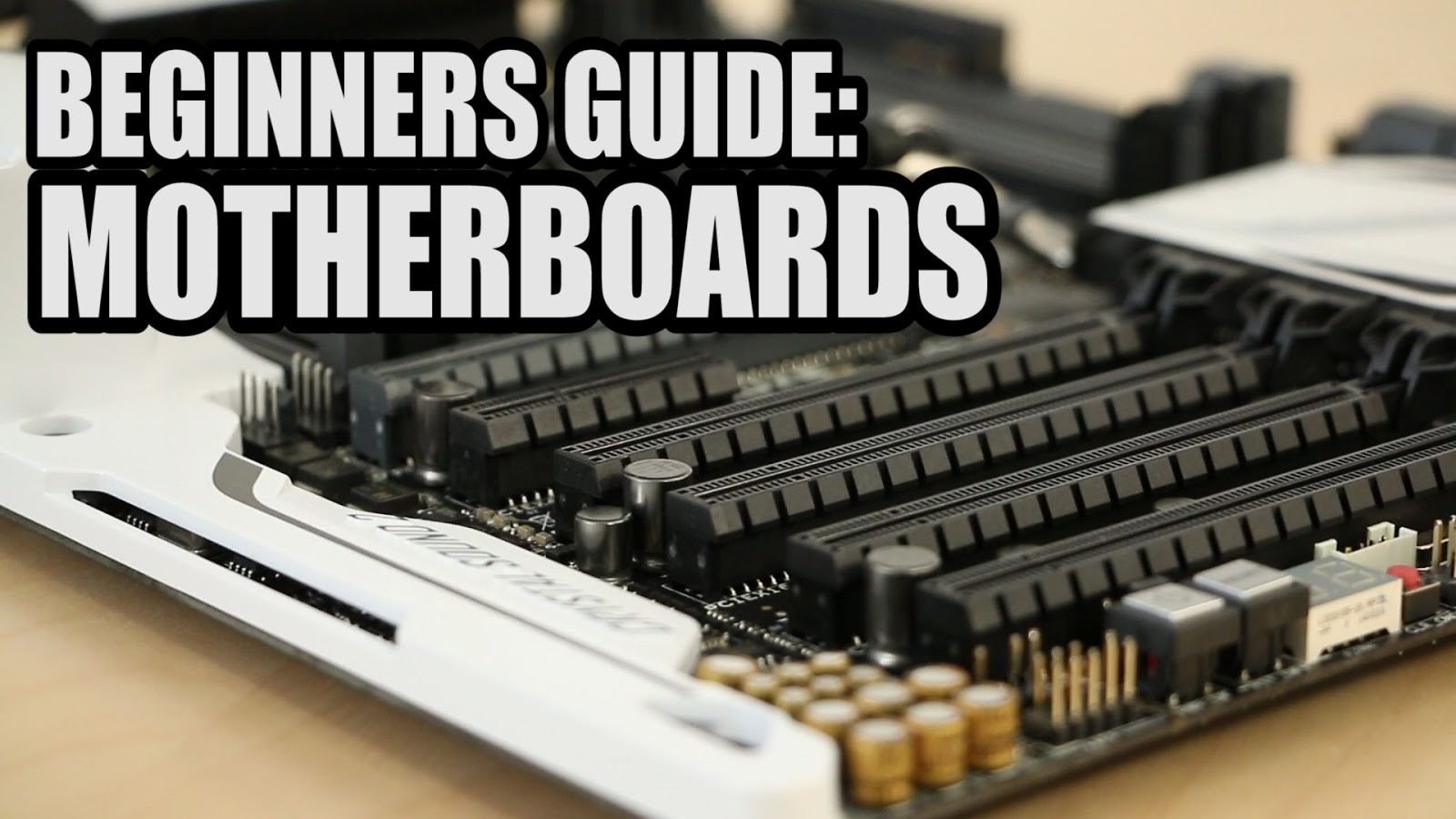
If you don't want to spend big bucks on a new PC, consider upgrading your old system's motherboard and CPU. This can boost the machine's performance and give you access to the latest technologies. It can also save you hundreds of dollars.

What you won't get is a new hard drive, optical drive, or operating system, though the new motherboard gives you the option of upgrading these components later. When you do it yourself, you choose the make, model, and cost that serve you best, rather than settling for what's preloaded in an off-the-shelf machine.

For as little as $200 to $350, you can purchase a motherboard with a new Pentium 4 or Athlon processor and 512MB of RAM. (Visit this link to check the latest motherboard prices.) That's hundreds of dollars less than the retail cost of a midrange PC that supports AGP 8X graphics cards, Serial ATA drives, and the other advanced features that your new motherboard is likely to offer.


Motherboard Buyers Guide

Size matters: Most desktop PCs sold in the last few years conform to the ATX form factor (as do most motherboards), but not all do. Many small or ultrabudget systems are based on other designs, and some PCs from HP/Compaq, IBM, and other big-name vendors aren't ATX-compatible. Refer to your computer's documentation to see if the new motherboard will fit inside its case.

Find the right CPU: The optimal combination of CPU price and performance may lead you to early versions of Athlon XP and Pentium 4 processors: Retail boxed versions of 1- to 2-GHz AMD Athlon XP processors cost less than $100, while Pentium 4 processors running at comparable speeds are less than $130. OEM versions of both (that's minus the fancy box, the cooling fan, and sometimes a warranty) may be priced considerably lower. Avoid older Pentium 4 processors with 256KB of L2 cache. CPUs with 512KB cache are faster and well worth the small added expense.

Be picky: Steer clear of no-name vendors and buy from established manufacturers only.

Pay for power: Your old PC's power supply may not have enough wattage or may lack the 12-volt amperage needed to run some Pentium 4 and Athlon motherboards. Check the new motherboard's requirements against the specs on your power supply. If in doubt, buy a power supply that generates 300 watts or more,

Faster is better: A motherboard's frontside bus speed is the rate at which data moves between the CPU and RAM. FSB speed can have a greater effect on overall system performance than listed CPU speed, which is a multiple of the FSB speed. The faster the FSB, the better.

Get it all: Your new motherboard needs PCI slots and USB ports, two UltraATA/100 connectors, parallel and serial ports (if you use these), and at least two DIMM slots for RAM (DDR RAM is best). For a little extra money, you can get Serial ATA, ethernet, RAID, FireWire, Wi-Fi, and other advanced features.

Sight and sound off: Some low-cost motherboards have sound and graphics functions built in. The quality of these integrated functions is often marginal. Make sure that any built-in sound and graphics can be disabled, and that separate audio and graphics boards can be added.
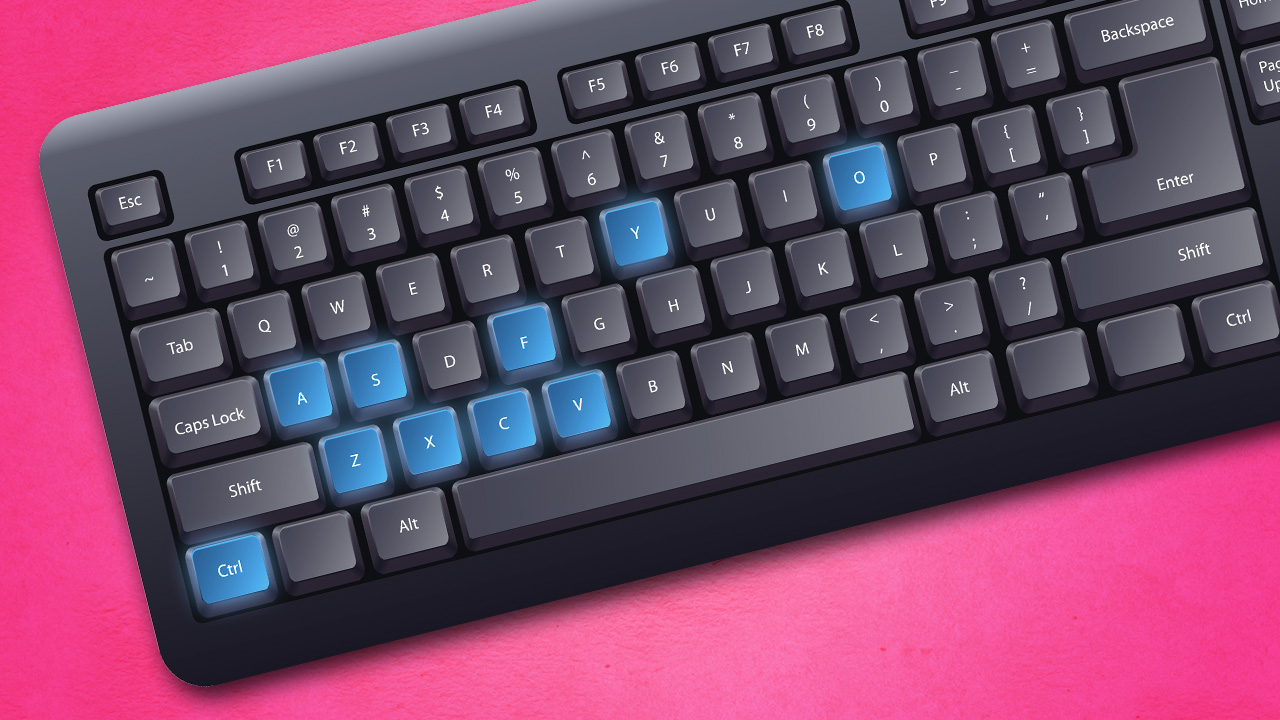
Getting used to using your keyboard exclusively and leaving your mouse behind will make you much more efficient at performing any task on any Windows system. I use the following keyboard shortcuts every day


Windows key + R = Run menu

This is usually followed by:
cmd = Command Prompt
iexplore + "web address" = Internet Explorer
compmgmt.msc = Computer Management
dhcpmgmt.msc = DHCP Management
dnsmgmt.msc = DNS Management
services.msc = Services
eventvwr = Event Viewer
dsa.msc = Active Directory Users and Computers
dssite.msc = Active Directory Sites and Services
Windows key + E = Explorer

ALT + Tab = Switch between windows

ALT, Space, X = Maximize window

CTRL + Shift + Esc = Task Manager

Windows key + Break = System properties

Windows key + F = Search

Windows key + D = Hide/Display all windows

CTRL + C = copy

CTRL + X = cut

CTRL + V = paste

Also don't forget about the "Right-click" key next to the right Windows key on your keyboard. Using the arrows and that key can get just about anything done once you've opened up any program.


Keyboard Shortcuts

[Alt] and [Esc] Switch between running applications

[Alt] and letter Select menu item by underlined letter

[Ctrl] and [Esc] Open Program Menu

[Ctrl] and [F4] Close active document or group windows (does not work with some applications)

[Alt] and [F4] Quit active application or close current window

[Alt] and [-] Open Control menu for active document

Ctrl] Lft., Rt. arrow Move cursor forward or back one word

Ctrl] Up, Down arrow Move cursor forward or back one paragraph

[F1] Open Help for active application

Windows+M Minimize all open windows

Shift+Windows+M Undo minimize all open windows

Windows+F1 Open Windows Help

Windows+Tab Cycle through the Taskbar buttons

Windows+Break Open the System Properties dialog box


Accessibility shortcuts

Right SHIFT for eight seconds........ Switch FilterKeys on and off.

Left ALT +left SHIFT +PRINT SCREEN....... Switch High Contrast on and off.

Left ALT +left SHIFT +NUM LOCK....... Switch MouseKeys on and off.

SHIFT....... five times Switch StickyKeys on and off.

NUM LOCK...... for five seconds Switch ToggleKeys on and off.

explorer shortcuts

END....... Display the bottom of the active window.

HOME....... Display the top of the active window.

NUM LOCK+ASTERISK....... on numeric keypad (*) Display all subfolders under the selected folder.

NUM LOCK+PLUS SIGN....... on numeric keypad (+) Display the contents of the selected folder.

NUM LOCK+MINUS SIGN....... on numeric keypad (-) Collapse the selected folder.

LEFT ARROW...... Collapse current selection if it's expanded, or select parent folder.

RIGHT ARROW....... Display current selection if it's collapsed, or select first subfolder.


Type the following commands in your Run Box (Windows Key + R) or Start Run

devmgmt.msc = Device Manager
msinfo32 = System Information
cleanmgr = Disk Cleanup
ntbackup = Backup or Restore Wizard (Windows Backup Utility)
mmc = Microsoft Management Console
excel = Microsoft Excel (If Installed)
msaccess = Microsoft Access (If Installed)
powerpnt = Microsoft PowerPoint (If Installed)
winword = Microsoft Word (If Installed)
frontpg = Microsoft FrontPage (If Installed)
notepad = Notepad
wordpad = WordPad
calc = Calculator
msmsgs = Windows Messenger
mspaint = Microsoft Paint
wmplayer = Windows Media Player
rstrui = System Restore
netscp6 = Netscape 6.x
netscp = Netscape 7.x
netscape = Netscape 4.x
waol = America Online
control = Opens the Control Panel
control printers = Opens the Printers Dialog


Internetbrowser

type in u're adress "google", then press [Right CTRL] and [Enter]
add www. and .com to word and go to it


For Windows XP:

Copy. CTRL+C
Cut. CTRL+X
Paste. CTRL+V
Undo. CTRL+Z
Delete. DELETE
Delete selected item permanently without placing the item in the Recycle Bin. SHIFT+DELETE
Copy selected item. CTRL while dragging an item
Create shortcut to selected item. CTRL+SHIFT while dragging an item
Rename selected item. F2
Move the insertion point to the beginning of the next word. CTRL+RIGHT ARROW
Move the insertion point to the beginning of the previous word. CTRL+LEFT ARROW
Move the insertion point to the beginning of the next paragraph. CTRL+DOWN ARROW
Move the insertion point to the beginning of the previous paragraph. CTRL+UP ARROW
Highlight a block of text. CTRL+SHIFT with any of the arrow keys
Select more than one item in a window or on the desktop, or select text within a document. SHIFT with any of the arrow keys
Select all. CTRL+A
Search for a file or folder. F3
View properties for the selected item. ALT+ENTER
Close the active item, or quit the active program. ALT+F4
Opens the shortcut menu for the active window. ALT+SPACEBAR
Close the active document in programs that allow you to have multiple documents open simultaneously. CTRL+F4
Switch between open items. ALT+TAB
Cycle through items in the order they were opened. ALT+ESC
Cycle through screen elements in a window or on the desktop. F6
Display the Address bar list in My Computer or Windows Explorer. F4
Display the shortcut menu for the selected item. SHIFT+F10
Display the System menu for the active window. ALT+SPACEBAR
Display the Start menu. CTRL+ESC
Display the corresponding menu. ALT+Underlined letter in a menu name
Carry out the corresponding command. Underlined letter in a command name on an open menu
Activate the menu bar in the active program. F10
Open the next menu to the right, or open a submenu. RIGHT ARROW
Open the next menu to the left, or close a submenu. LEFT ARROW
Refresh the active window. F5
View the folder one level up in My Computer or Windows Explorer. BACKSPACE
Cancel the current task. ESC
SHIFT when you insert a CD into the CD-ROM drive Prevent the CD from automatically playing.

Use these keyboard shortcuts for dialog boxes:

To Press
Move forward through tabs. CTRL+TAB
Move backward through tabs. CTRL+SHIFT+TAB
Move forward through options. TAB
Move backward through options. SHIFT+TAB
Carry out the corresponding command or select the corresponding option. ALT+Underlined letter
Carry out the command for the active option or button. ENTER
Select or clear the check box if the active option is a check box. SPACEBAR
Select a button if the active option is a group of option buttons. Arrow keys
Display Help. F1
Display the items in the active list. F4
Open a folder one level up if a folder is selected in the Save As or Open dialog box. BACKSPACE

If you have a Microsoft Natural Keyboard, or any other compatible keyboard that includes the Windows logo key and the Application key , you can use these keyboard shortcuts:


Display or hide the Start menu. WIN Key
Display the System Properties dialog box. WIN Key+BREAK
Show the desktop. WIN Key+D
Minimize all windows. WIN Key+M
Restores minimized windows. WIN Key+Shift+M
Open My Computer. WIN Key+E
Search for a file or folder. WIN Key+F
Search for computers. CTRL+WIN Key+F
Display Windows Help. WIN Key+F1
Lock your computer if you are connected to a network domain, or switch users if you are not connected to a network domain. WIN Key+ L
Open the Run dialog box. WIN Key+R
Open Utility Manager. WIN Key+U

Accessibility keyboard shortcuts:

Switch FilterKeys on and off. Right SHIFT for eight seconds
Switch High Contrast on and off. Left ALT+left SHIFT+PRINT SCREEN
Switch MouseKeys on and off. Left ALT +left SHIFT +NUM LOCK
Switch StickyKeys on and off. SHIFT five times
Switch ToggleKeys on and off. NUM LOCK for five seconds
Open Utility Manager. WIN Key+U

Shortcuts you can use with Windows Explorer:


Display the bottom of the active window. END
Display the top of the active window. HOME
Display all subfolders under the selected folder. NUM LOCK+ASTERISK on numeric keypad (*)
Display the contents of the selected folder. NUM LOCK+PLUS SIGN on numeric keypad (+)
Collapse the selected folder. NUM LOCK+MINUS SIGN on numeric keypad (-)
Collapse current selection if it's expanded, or select parent folder. LEFT ARROW
Display current selection if it's collapsed, or select first subfolder. RIGHT ARROW

Fatal error: the system has become unstable or is busy," it says. "enter to return to windows or press control-alt-delete to restart your computer. If you do this you will lose any unsaved information in all open applications."

you have just been struck by the blue screen of death. Anyone who uses mcft windows will be familiar with this. What can you do? More importantly, how can you prevent it happening?

1 Hardware Conflict

the number one reason why windows crashes is hardware conflict. Each hardware device communicates to other devices through an interrupt request channel (irq). These are supposed to be unique for each device.

For example, a printer usually connects internally on irq 7. The keyboard usually uses irq 1 and the floppy disk drive irq 6. Each device will try to hog a single irq for itself.

If there are a lot of devices, or if they are not installed properly, two of them may end up sharing the same irq number. When the user tries to use both devices at the same time, a crash can happen. The way to check if your computer has a hardware conflict is through the following route:

* start-settings-control panel-system-device manager.

Often if a device has a problem a yellow '!' appears next to its description in the device manager. Highlight computer (in the device manager) and press properties to see the irq numbers used by your computer. If the irq number appears twice, two devices may be using it.

Sometimes a device might share an irq with something described as 'irq holder for pci steering'. This can be ignored. The best way to fix this problem is to remove the problem device and reinstall it.

Sometimes you may have to find more recent drivers on the internet to make the device function properly. A good resource is www.Driverguide.Com. If the device is a soundcard, or a modem, it can often be fixed by moving it to a different slot on the motherboard (be careful about opening your computer, as you may void the warranty).

When working inside a computer you should switch it off, unplug the mains lead and touch an unpainted metal surface to discharge any static electricity.

To be fair to mcft, the problem with irq numbers is not of its making. It is a legacy problem going back to the first pc designs using the ibm 8086 chip. Initially there were only eight irqs. Today there are 16 irqs in a pc. It is easy to run out of them. There are plans to increase the number of irqs in future designs.

2 Bad Ram

ram (random-access memory) problems might bring on the blue screen of death with a message saying fatal exception error. A fatal error indicates a serious hardware problem. Sometimes it may mean a part is damaged and will need replacing.

But a fatal error caused by ram might be caused by a mismatch of chips. For example, mixing 70-nanosecond (70ns) ram with 60ns ram will usually force the computer to run all the ram at the slower speed. This will often crash the machine if the ram is overworked.

One way around this problem is to enter the bios settings and increase the wait state of the ram. This can make it more stable. Another way to troubleshoot a suspected ram problem is to rearrange the ram chips on the motherboard, or take some of them out. Then try to repeat the circumstances that caused the crash. When handling ram try not to touch the gold connections, as they can be easily damaged.

Parity error messages also refer to ram. Modern ram chips are either parity (ecc) or non parity (non-ecc). It is best not to mix the two types, as this can be a cause of trouble.

Emm386 error messages refer to memory problems but may not be connected to bad ram. This may be due to free memory problems often linked to old dos-based programmes.

3 Bios Settings

every motherboard is supplied with a range of chipset settings that are decided in the factory. A common way to access these settings is to press the f2 or delete button during the first few seconds of a boot-up.

Once inside the bios, great care should be taken. It is a good idea to write down on a piece of paper all the settings that appear on the screen. That way, if you change something and the computer becomes more unstable, you will know what settings to revert to.

A common bios error concerns the cas latency. This refers to the ram. Older edo (extended data out) ram has a cas latency of 3. Newer sdram has a cas latency of 2. Setting the wrong figure can cause the ram to lock up and freeze the computer's display.

Mcft windows is better at allocating irq numbers than any bios. If possible set the irq numbers to auto in the bios. This will allow windows to allocate the irq numbers (make sure the bios setting for plug and play os is switched to 'yes' to allow windows to do this.).

4 Hard Disk Drives

after a few weeks, the information on a hard disk drive starts to become piecemeal or fragmented. It is a good idea to defragment the hard disk every week or so, to prevent the disk from causing a screen freeze. Go to

* start-programs-accessories-system tools-disk defragmenter

this will start the procedure. You will be unable to write data to the hard drive (to save it) while the disk is defragmenting, so it is a good idea to schedule the procedure for a period of inactivity using the task scheduler.

The task scheduler should be one of the small icons on the bottom right of the windows opening page (the desktop).

Some lockups and screen freezes caused by hard disk problems can be solved by reducing the read-ahead optimisation. This can be adjusted by going to

* start-settings-control panel-system icon-performance-file system-hard disk.

Hard disks will slow down and crash if they are too full. Do some housekeeping on your hard drive every few months and free some space on it. Open the windows folder on the c drive and find the temporary internet files folder. Deleting the contents (not the folder) can free a lot of space.

Empty the recycle bin every week to free more space. Hard disk drives should be scanned every week for errors or bad sectors. Go to

* start-programs-accessories-system tools-scandisk

otherwise assign the task scheduler to perform this operation at night when the computer is not in use.

5 Fatal Or Exceptions And Vxd Errors

fatal oe exception errors and vxd errors are often caused by video card problems.

These can often be resolved easily by reducing the resolution of the video display. Go to

* start-settings-control panel-display-settings

here you should slide the screen area bar to the left. Take a look at the colour settings on the left of that window. For most desktops, high colour 16-bit depth is adequate.

If the screen freezes or you experience system lockups it might be due to the video card. Make sure it does not have a hardware conflict. Go to

* start-settings-control panel-system-device manager

here, select the + beside display adapter. A line of text describing your video card should appear. Select it (make it blue) and press properties. Then select resources and select each line in the window. Look for a message that says no conflicts.

If you have video card hardware conflict, you will see it here. Be careful at this point and make a note of everything you do in case you make things worse.

The way to resolve a hardware conflict is to uncheck the use automatic settings box and hit the change settings button. You are searching for a setting that will display a no conflicts message.

Another useful way to resolve video problems is to go to

* start-settings-control panel-system-performance-graphics

here you should move the hardware acceleration slider to the left. As ever, the most common cause of problems relating to graphics cards is old or faulty drivers (a driver is a small piece of software used by a computer to communicate with a device).

Look up your video card's manufacturer on the internet and search for the most recent drivers for it.

6 Viruses


often the first sign of a virus infection is instability. Some viruses erase the boot sector of a hard drive, making it impossible to start. This is why it is a good idea to create a windows start-up disk. Go to

* start-settings-control panel-add/remove programs

here, look for the start up disk tab. Virus protection requires constant vigilance.

A virus scanner requires a list of virus signatures in order to be able to identify viruses. These signatures are stored in a dat file. Dat files should be updated weekly from the website of your antivirus software manufacturer.

An excellent antivirus programme is mcafee virusscan by network associates ( www.Nai.Com). Another is norton antivirus 2000, made by symantec ( www.Symantec.Com).

7 Printers

the action of sending a document to print creates a bigger file, often called a postscript file.

Printers have only a small amount of memory, called a buffer. This can be easily overloaded. Printing a document also uses a considerable amount of cpu power. This will also slow down the computer's performance.

If the printer is trying to print unusual characters, these might not be recognised, and can crash the computer. Sometimes printers will not recover from a crash because of confusion in the buffer. A good way to clear the buffer is to unplug the printer for ten seconds. Booting up from a powerless state, also called a cold boot, will restore the printer's default settings and you may be able to carry on.

8 Software

a common cause of computer crash is faulty or badly-installed software. Often the problem can be cured by uninstalling the software and then reinstalling it. Use norton uninstall or uninstall shield to remove an application from your system properly. This will also remove references to the programme in the system registry and leaves the way clear for a completely fresh copy.

The system registry can be corrupted by old references to obsolete software that you thought was uninstalled. Use reg cleaner by jouni vuorio to clean up the system registry and remove obsolete entries. It works on windows 95, windows 98, windows 98 se (second edition), windows millennium edition (me), nt4 and windows 2000.

Read the instructions and use it carefully so you don't do permanent damage to the registry. If the registry is damaged you will have to reinstall your operating system. Reg cleaner can be obtained from www.Jv16.Org

often a windows problem can be resolved by entering safe mode. This can be done during start-up. When you see the message "starting windows" press f4. This should take you into safe mode.

Safe mode loads a minimum of drivers. It allows you to find and fix problems that prevent windows from loading properly.

Sometimes installing windows is difficult because of unsuitable bios settings. If you keep getting suwin error messages (windows setup) during the windows installation, then try entering the bios and disabling the cpu internal cache. Try to disable the level 2 (l2) cache if that doesn't work.

Remember to restore all the bios settings back to their former settings following installation.

9 Overheating

central processing units (cpus) are usually equipped with fans to keep them cool. If the fan fails or if the cpu gets old it may start to overheat and generate a particular kind of error called a kernel error. This is a common problem in chips that have been overclocked to operate at higher speeds than they are supposed to.

One remedy is to get a bigger better fan and install it on top of the cpu. Specialist cooling fans/heatsinks are available from www.Computernerd.Com or www.Coolit.Com

cpu problems can often be fixed by disabling the cpu internal cache in the bios. This will make the machine run more slowly, but it should also be more stable.

10 Power Supply Problems

with all the new construction going on around the country the steady supply of electricity has become disrupted. A power surge or spike can crash a computer as easily as a power cut.

If this has become a nuisance for you then consider buying a uninterrupted power supply (ups). This will give you a clean power supply when there is electricity, and it will give you a few minutes to perform a controlled shutdown in case of a power cut.

It is a good investment if your data are critical, because a power cut will cause any unsaved data to be lost.

Most of you download and use pirated software from torrents or any such other sites, but sometime it gets very difficult to find serial key of those softwares. I will make it easy for you by showing you simple yet very intersting google trick which will allow you to find serial key of any software very easily.

How To Find Serial Key Of Any Software ?

The key 94FBR is a part of  Office 2000 Pro CD activation key that is widely distributed as it bypasses the activation requirements of Office 2000 Pro. By searching for 94fbr and the product name, you are guarantee that the pages that are returned are pages dealing specifically with the product you're wanting a serial for. Follow simple steps given below to learn this trick

    1. Go to Google
    2. Then type  Software Name 94FBR
  • Replace Software Name with the name of software whose serial key you want to find
  • Eg: To find serial key of Nero i will type Nero 94fbr
    3. Now press Enter and you will find serial key of software you are looking for
Lot of Things Changed in Windows 8 as Compared to Windows 7, Start Screen Was One of the Addition to Windows 8, Have a look at 5 Ways to Customize Windows 8 Start screen , And Couple of things have Even Disappeared From Windows 8 like Start Button and Hibernate Option. Probably the Reason Microsoft Disabled Hibernate option is Because Windows 8  Boots up and Shuts down Faster then The Older Versions. But if you Wish to Enable Hibernate In Windows 8 then Continue Reading.

WHAT IS HIBERNATE ?

Before Moving Forward let us have a Short Explaination About What Hibernate actually is.
Hibernation is powering down a computer while retaining its state. Upon hibernation, the computer saves the contents of its random access memory (RAM) to a hard disk or other non-volatile storage. Upon resumption, the computer is exactly as it was upon entering hibernation. When used to save power, hibernation is similar to sleep mode and saves more power at the cost of slower resumption.

STEPS TO ENABLE HIBERNATE IN WINDOWS 8

Hibernate Option is Actually Hidden in Windows 8, We Can easily Unhide it and Enable it. Just Follow The Below Simple Steps to Enable Hibernate In Windows 8
Step 1: Press Win + W key ie: Windows key and “W” key to open up Setting search menu. Then Type “Power” , Windows will Show you Few Results, You have to Click on “Power Option”
Step 2: Now From the Left Pane, Click on Choose What the Power Button do.


Step 3: Then on Next Screen Click on  Change Settings that are currently Unavailable.
Step 4:  Now Scroll Down to “Shutdown Settings” Section, and Check  Hibernate box to Enable it and Click onSave Changes.


Step 5: Everything is done, Now next time whenever you need to Hibernate your PC, just Move your Mouse pointer to right corner of your screen to Show up Charm screen, Click on Setting> Power.

You will notice Hibernate Option added there. So in this Tutorial we Saw What Hibernate is and how to Enable Hibernate In Windows 8, Hope this Helps you .